



Fattori chiave che influenzano la qualità della plastificazione nell'estrusione di cavi e fibre ottiche
June 17, 2026

Riassunto
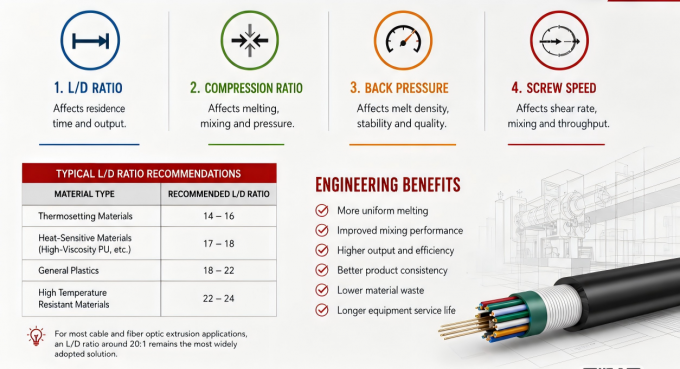
Nella produzione di cavi e fibre ottiche, la qualità dell'estrusione è direttamente legata alle prestazioni del sistema di plastificazione.Gli ingegneri esperti di estrusione comprendono che quattro parametri aggiuntivi hanno un impatto significativo sulla qualità della fusione e sulla stabilità della produzione:
- Rapporto lunghezza/diametro (L/D ratio)
- Rapporto di compressione
- Pressione della schiena
- Velocità della vite
Questo documento tecnico spiega come questi parametri influenzano il processo di plastificazione e fornisce raccomandazioni di ingegneria pratiche per ottimizzare le prestazioni di estrusione.
1. Comprendere il rapporto lunghezza/diametro (L/D ratio)
Il rapporto L/D è definito come la lunghezza di lavoro effettiva della vite divisa per il suo diametro.
Perché il rapporto L/D è importante
Un rapporto L/D correttamente selezionato consente un tempo di permanenza sufficiente del materiale all'interno della canna, consentendo:
✔ Fusione più uniforme
✔ Migliorare la consistenza della temperatura
✔ Miglioramento della capacità di miscelazione
✔ Maggiore potenza di estrusione
✔ Migliore qualità del prodotto
Per le applicazioni di isolamento e rivestimento dei cavi, una corretta plastificazione è fondamentale per ottenere uno spessore di parete stabile e un'eccellente finitura superficiale.
Vantaggi di tassi di reddito/risparmio più elevati
Una vite più lunga fornisce:
- Miglioramento della stabilità di alimentazione
- Migliore omogeneizzazione della fusione
- Aumento della capacità di produzione
- Maggiore efficienza produttiva
Considerazioni ingegneristiche
L'aumento del rapporto L/D presenta anche delle sfide:
- Costi di produzione più elevati
- Maggiore deflessione della vite
- Requisiti di coppia più elevati
- Tolleranze di lavorazione più esigenti
Per le viti di estrusione di piccolo diametro, la resistenza meccanica deve sempre essere verificata durante la progettazione.
2Il rapporto di compressione e il suo effetto sulla plastificazione
Il rapporto di compressione è determinato dalla riduzione della profondità del canale di vite tra la sezione di alimentazione e quella di misurazione.
Funzioni primarie
La sezione di compressione svolge diversi compiti critici:
- Compattazione del materiale
- Accelerazione di fusione
- Rimozione dell'aria
- Generazione di pressione
- Omogeneizzazione della fusione
Vantaggi di un corretto rapporto di compressione
Un rapporto di compressione ben progettato può fornire:
- Fusione uniforme
- Pressione di estrusione stabile
- Miglioramento della consistenza del prodotto
- Migliore dispersione degli additivi e del masterbatch colorante
Rischi di eccessiva compressione
Troppa compressione può causare:
- Degradazione dei materiali
- Scaldo eccessivo per taglio
- Aumento del consumo energetico
- Usura delle viti
Il rapporto di compressione ottimale deve sempre essere scelto in base alle caratteristiche del materiale e alle esigenze di produzione.
3. Contropressione: parametro critico del processo
La contrapressione si genera quando il polimero fuso incontra una resistenza mentre scorre attraverso il sistema di estrusione.
Vantaggi della pressione della schiena controllata
Una corretta pressione sulla schiena contribuisce a:
- Densità di fusione più elevata
- Migliore distribuzione della temperatura
- Miglioramento delle prestazioni di miscelazione
- Riduzione dei difetti del prodotto
- Estrusione più stabile
Potenziali problemi
L' eccessiva pressione della schiena può causare:
- Degradazione dei polimeri
- Super riscaldamento
- Aumento del consumo energetico
- Condizioni di produzione instabili
Per un'estrusione efficiente è essenziale una contropressione equilibrata.
4. Velocità della vite e prestazioni di produzione
La velocità della vite influenza direttamente:
- Velocità di taglio
- Tempo di residenza
- Temperatura di fusione
- Produzione
Vantaggi di una maggiore velocità di vite
Quando è adeguatamente controllato, una velocità di vite più elevata può:
- Aumentare la produzione
- Migliorare l'efficienza della produzione
- Migliorare le prestazioni di miscelazione
- Migliorare la dispersione degli additivi
Rischi di velocità eccessiva della vite
La circolazione al di là del raggio di velocità ottimale può causare:
- Calore eccessivo di taglio
- Degradazione dei materiali
- Instabilità della fusione
- Riduzione della qualità del prodotto
La velocità ideale della vite deve essere determinata attraverso l'ottimizzazione del processo e la sperimentazione dei materiali.
Raccomandazioni tipiche relative al rapporto L/D
| Tipo di materiale | Rapporto L/D raccomandato |
| Materiali termoassistenti | 14 ¢16 |
| Materiali sensibili al calore | 17 ¢ 18 |
| Plastiche generali | 18 ¢22 |
| Materiali resistenti alle alte temperature | 22 ¢ 24 |
Per la maggior parte delle applicazioni di estrusione via cavo e fibra ottica, un rapporto L/D di circa 20:1 rimane la soluzione più ampiamente adottata.
Wirecan Ingegneria prospettiva
Alla Dongguan Wirecan Technology Co., Ltd., la progettazione di vite di estrusione è una delle tecnologie chiave alla base della produzione di cavi stabili e di fibre ottiche.
Il nostro team di ingegneri sviluppa e ottimizza continuamente:
- Linee di estrusione per cavi in fibra ottica
- Linee di produzione di cavi FTTH
- Linee di estrusione di tubi sciolti
- Apparecchiature per la fabbricazione di cavi LAN
- Sistemi di estrussione dei cavi di alimentazione
- Fabbricazione a partire da materiali di caldo o di caldo
Combinando l'esperienza di produzione pratica con principi avanzati di progettazione di viti, Wirecan aiuta i clienti a raggiungere:
✓ maggiore produzione
✓ Migliore consistenza del prodotto
✓ minore spreco di materiali
✓ Miglioramento dell'efficienza della produzione
✓ durata di vita più lunga dell'apparecchiatura
Riguardo a WIRECAN
Dongguan Wirecan Technology Co., Ltd.
Specializzato nella produzione di apparecchiature per cavi e fibre ottiche
Sito web:www.fibercablemachine.com
Prodotti:
- Macchine per la colorazione e il rimbocco delle fibre
- Linee di produzione di cavi FTTH
- Linee di estrusione di tubi sciolti
- SZ Macchine per la riparazione di fili
- Apparecchiature per la fabbricazione di cavi ottici
- Componenti di estrusione personalizzati